Guides & Insights
2026年11月11日
Blade Fuses Explained: Standard, Mini and Micro — What Distributors Should Stock
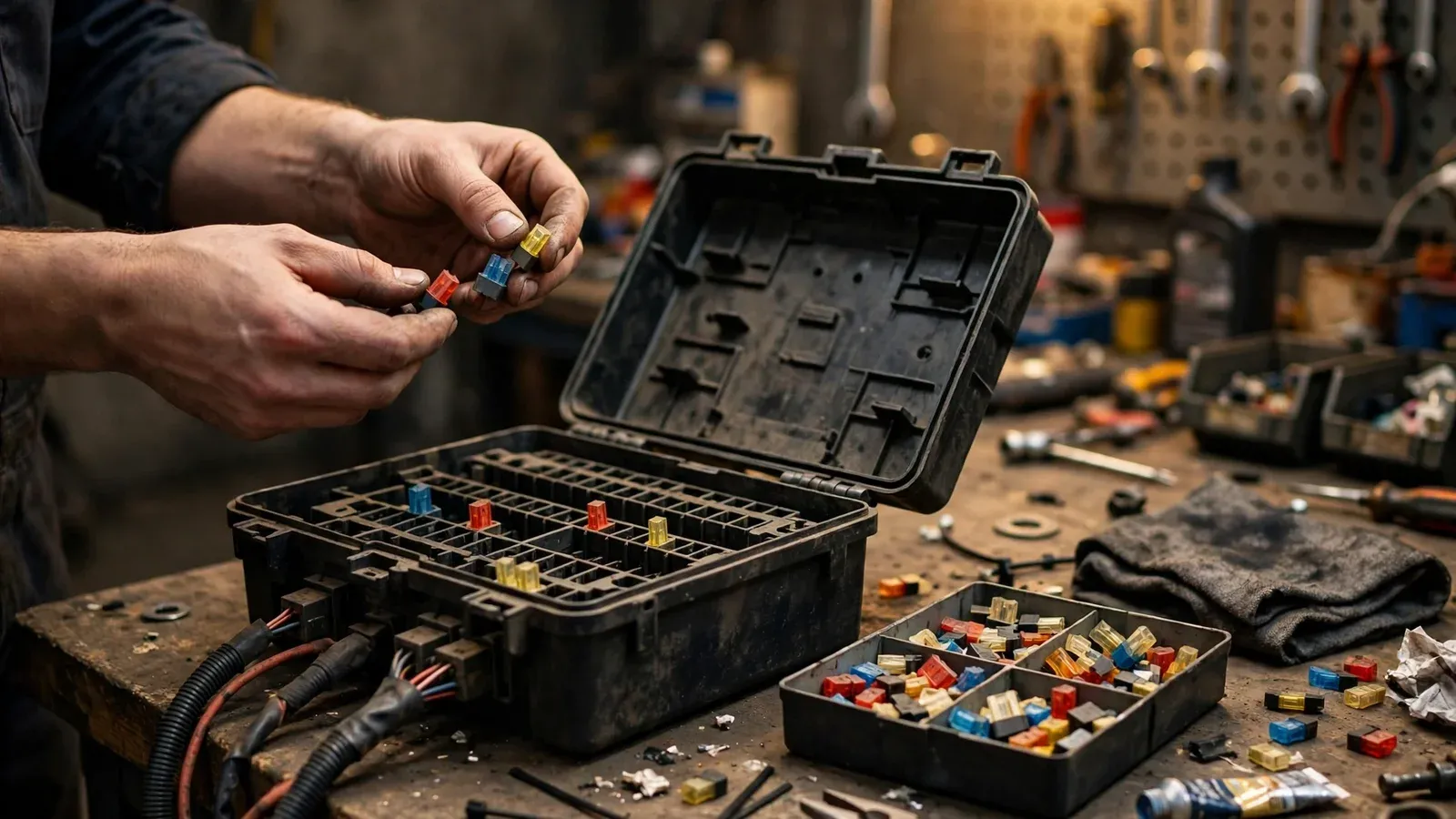
Blade fuses are the most commonly replaced electrical part in a vehicle, and one of the easiest to get wrong. A customer asks for "a 15 amp fuse", takes the wrong physical size, and comes back annoyed
Blade fuses are the most commonly replaced electrical part in a vehicle, and one of the easiest to get wrong. A customer asks for "a 15 amp fuse", takes the wrong physical size, and comes back annoyed — or worse, forces it in and damages the fuse box. If you stock vehicle electrics, knowing the three blade-fuse sizes and how they are used is basic range knowledge.
The three sizes
All three types work the same way — a metal strip that melts when current exceeds its rating — but they differ in physical size and in where they are used.
- Standard (ATO/ATC): the original blade fuse, about 19 mm wide. Still common in older vehicles, trucks, trailers and aftermarket fuse blocks. Its larger size makes it easy to handle and to read.
- Mini (ATM/APM): about 11 mm wide, roughly two-thirds the size of a standard fuse. Found in most cars built from the late 1990s onward, where fuse boxes had to fit more circuits into less space.
- Micro (Micro2 / ATR): about 9 mm wide and the smallest of the three. Used in newer vehicles where the fuse box is packed tight. It is easy to confuse with mini at a glance, which is why the two should never share a drawer.
There are also low-profile variants of mini and micro fuses, which sit closer to the fuse box surface. They are electrically the same as their standard-height counterparts but physically shorter — a detail worth confirming before quoting, because a low-profile fuse in a standard socket, or the reverse, can sit proud or fail to make proper contact.
Colour coding: the quick check that prevents mistakes
Blade fuses follow a widely used colour code tied to the amp rating, so an experienced installer can spot the rating without reading the number stamped on top. The common values: 5A tan, 7.5A brown, 10A red, 15A blue, 20A yellow, 25A clear or white, and 30A green. The colour is a useful double-check, but the stamped number is the authority — if the two disagree, trust the number and check the fuse itself, because a previous owner may have fitted the wrong rating.
The mistakes that cause returns
Wrong size, right rating. The most common return in this category. A 15A mini fuse does not fit a standard fuse box, and a standard fuse does not fit a mini socket. When a customer is unsure, ask for the vehicle year and model, or better, ask them to bring the old fuse — matching it side by side takes seconds.
Wrong rating, right size. Replacing a blown fuse with a higher-rated one is a safety problem, not a fix: the fuse is supposed to be the weakest link. If a fuse keeps blowing, the circuit has a fault — a short, a failing motor, or a wire chafed to earth — and a bigger fuse just lets the fault damage something more expensive. Never sell a higher rating as a solution to repeated blowing; sell the correct rating and suggest the customer has the circuit checked.
No spares in the cab. A blown fuse on the road is a five-minute fix if the driver has a spare. Fuse assortments — a small box with the common ratings in one size — are a natural add-on sale with any fuse box, trailer kit or accessory order, and they are the kind of item a fleet workshop buys by the box.
Building the range
For a distributor, the practical core is compact: all three sizes in the common ratings from 5A to 30A, a mixed assortment box per size, and a fuse puller or two in the display. Add the matching inline fuse holders and fuse blocks from the power accessories range, and you cover both the replacement sale and the new-installation sale from the same shelf.
Keep the three sizes in separate, clearly labelled bins. The day mini and micro fuses get mixed up in one drawer is the day your counter staff start handing out the wrong part — and the customer only discovers it at the roadside.
Browse our Power Accessories category for fuse holders, fuse blocks and related parts, or send us your range list and we will quote fuses and holders together as one combined order.